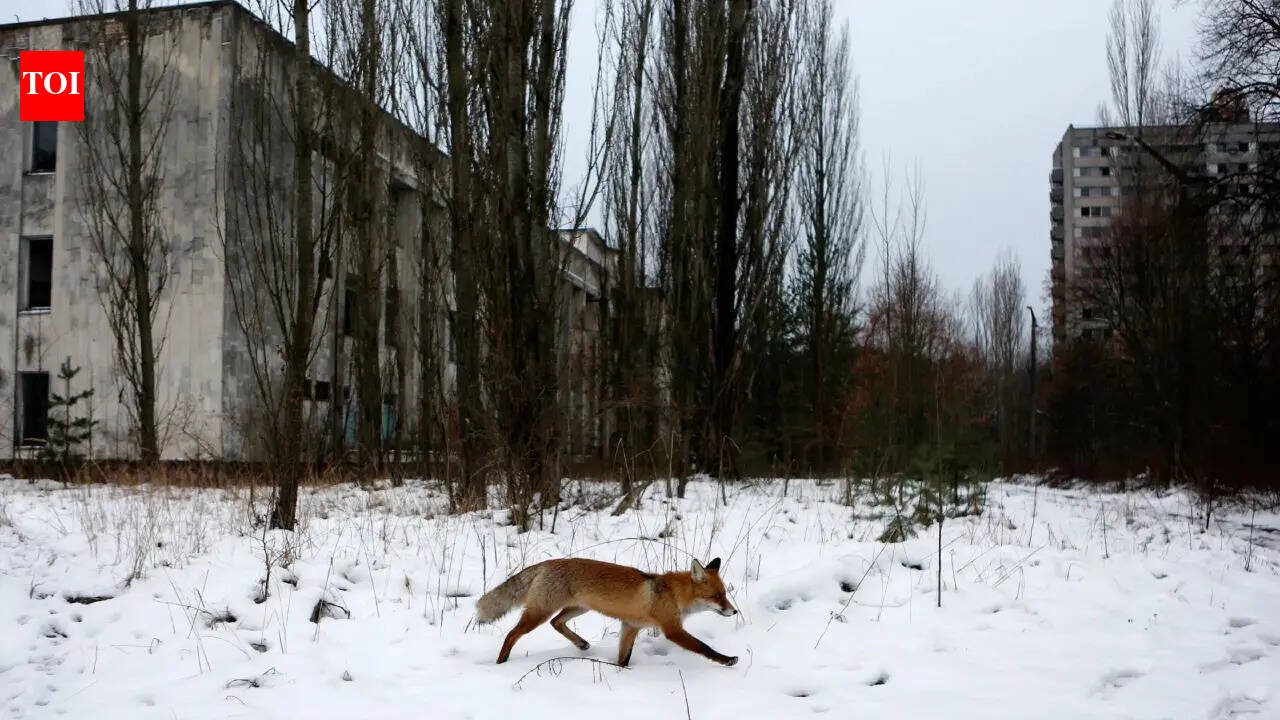
Wasteland turned wildlife hotspot: Nearly 40 years after Chernobyl, nature and science are both thriving in the poisonous land
Published on: June 24, 2026, 1:43 p.m. | Source: Times of India
Back in 1986, when reactor no. 4 at the Chernobyl Nuclear Power Plant exploded on April 26, 1986, it sent radioactive fallout across northern Ukraine. More than 100,000 people were evacuated from the surrounding region, and a 30-kilometre exclusion ‘ghost’ zone was established that remains largely uninhabited to this day.People figured the place would stay dead for centuries.But nature, as it turns out, didn’t bother much with those predictions.People expected Chernobyl to become a lifeless wasteland.But turns out, nature had other plans.Now, it’s become one of the strangest wildlife recoveries on Earth. Wolves patrol abandoned streets, lynx and deer wander through overgrown houses, and even boar and foxes have made a comeback. The story isn’t as simple as “nature beats radiation,” though.Sure, the Chernobyl wilds are different — but not in the way monster-movie fans might think.

